What does our commercial HVAC service cover?
Best HVAC Toronto serves commercial clients across the GTA: property managers with multi-site portfolios, restaurants, retail units, offices, and warehouses. The work spans packaged rooftop unit installation and replacement, make-up air and commercial kitchen ventilation, commercial boiler rooms, VAV zone equipment, and planned maintenance agreements with priority dispatch.
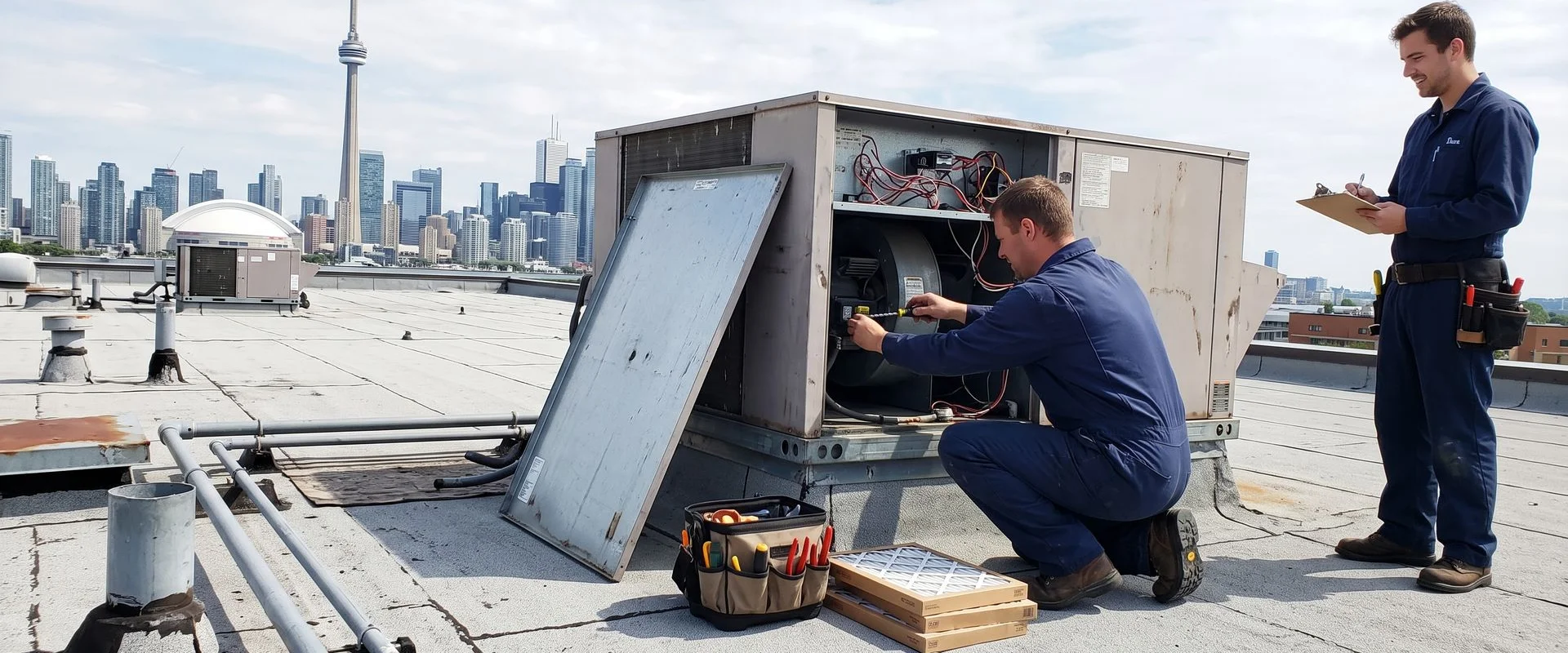
Commercial work differs from residential in three ways that matter to how a job is run. First, downtime has a direct revenue cost, so scheduling around trading hours is part of the scope rather than a favour. Second, the equipment is larger and usually on a roof, which brings crane lifts, curb adaptation, permits, and coordination with roofing and electrical trades into every replacement project. Third, the compliance and documentation requirements are heavier, particularly for gas appliances and commercial kitchens.
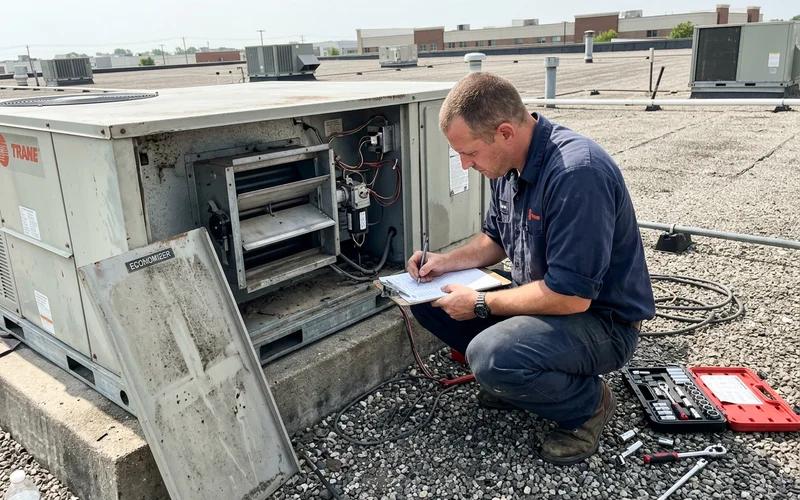
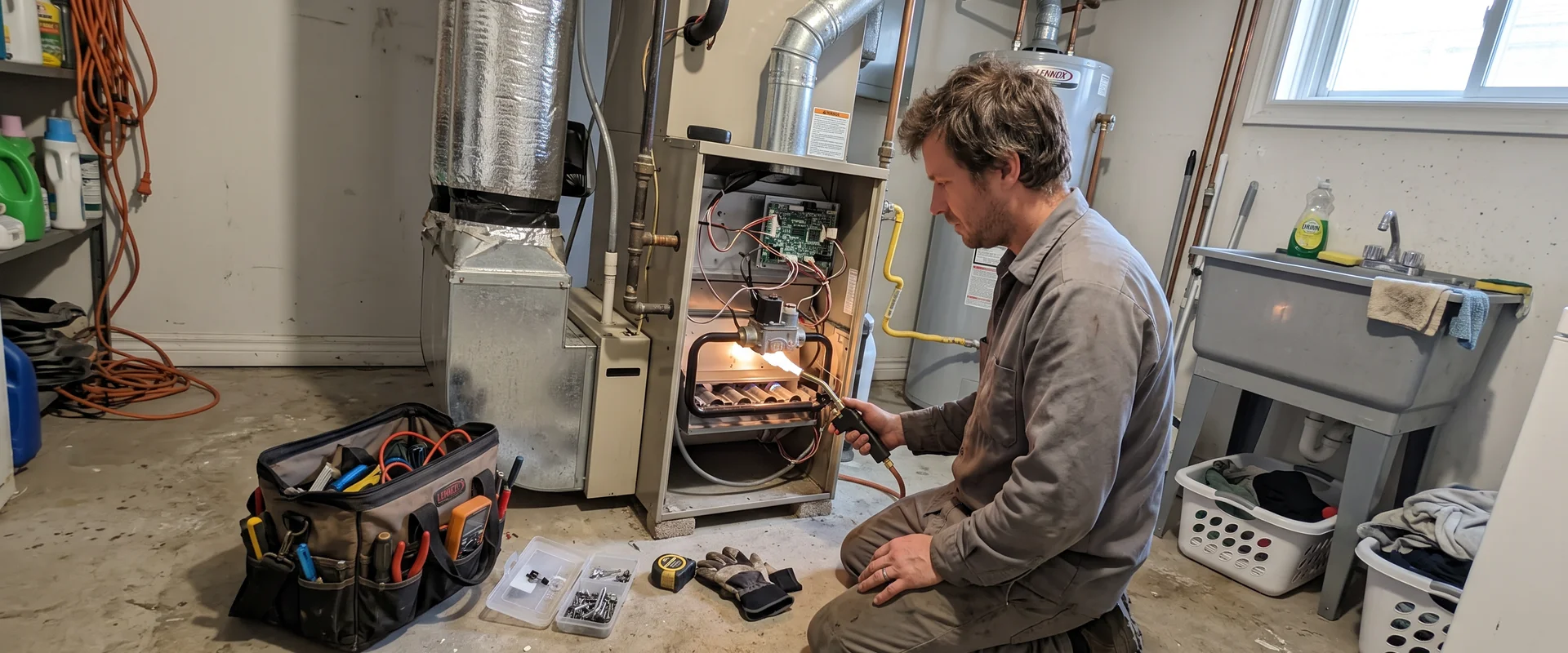
We handle gas compliance in-house. Commercial rooftop units, make-up air units, and boiler rooms are gas appliances subject to the same TSSA requirements as residential equipment, and they get red-tagged too. Having G1/G2 certified technicians on the same crew that maintains your equipment means an inspection finding can be corrected and cleared without waiting on a second contractor, which is often the difference between a half-day outage and a week of disruption.
What is included in a planned maintenance agreement
Scheduled seasonal servicing with a documented reading sheet at every visit, filter and belt replacement, coil cleaning, economizer and damper operation checks, refrigerant and electrical verification, combustion analysis on gas sections, condition reporting with photographs, priority dispatch on breakdowns, and an annual capital planning summary so replacements can be budgeted rather than discovered.
What we work on
Packaged rooftop units
The workhorse of Toronto retail and light commercial. We size on actual load rather than replacing tonnage for tonnage, adapt or replace curbs, coordinate the crane lift, and commission the unit with recorded readings. Economizers get particular attention, since seized dampers and failed enthalpy sensors are among the most common and most wasteful faults we find.
Restaurant and commercial kitchen HVAC
Exhaust hoods remove enormous volumes of air, and that air has to be replaced. Undersized or failed make-up air makes doors hard to open, causes appliances to draft poorly, and pulls conditioned air out of the dining room. We size and balance make-up air properly against total exhaust volume.
Office and retail systems
Split systems, packaged units, and VAV zone equipment. Zone-level complaints usually trace to a failed VAV actuator or controller rather than the central plant, which is a much cheaper fix once correctly diagnosed.
Warehouse and industrial
Unit heaters, make-up air, destratification, and ventilation for large-volume spaces where heating a full building height is rarely the efficient answer.
Commercial boiler rooms
Cascade and staged condensing boilers, circulators, and controls for multi-unit residential and commercial buildings, with documented annual servicing.
What affects commercial HVAC project cost?
Equipment size and count come first: tonnage, heating capacity, and how many units are involved. Second is access and rigging, since a crane lift on a busy street with occupancy permits costs considerably more than a lift into an open parking lot.
Third is curb and duct adaptation. New units rarely match the footprint of what they replace, so a curb adapter or transition ductwork is usually required. Fourth is controls and electrical, particularly where three-phase service or building automation integration is involved.
Fifth is scheduling. Work phased overnight or across a weekend to protect trading hours costs more in labour but usually far less than the revenue lost to a weekday closure. We put all five into a written scope with the phasing plan included, so you can weigh the trade-off with real numbers in front of you.