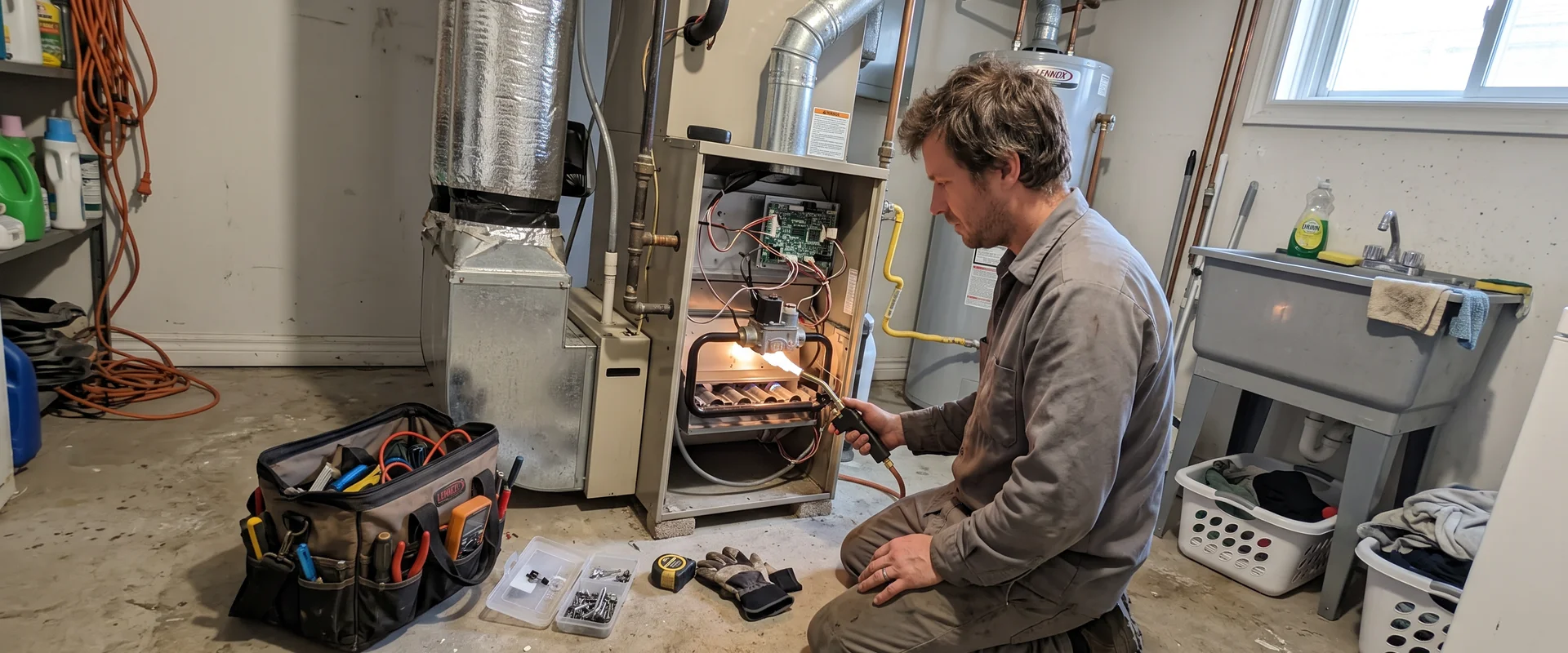
What is an Enbridge red tag, and what happens next?
A red tag is the notice a gas technician or utility inspector attaches to an appliance when they find an unsafe condition. There are two kinds, and the difference matters. A Type A Warning Tag means the hazard is immediate, so the gas is shut off and the meter is locked before anyone leaves the property. A Type B Warning Tag means the fault is serious but not an immediate danger, and you are given a defined window to have it corrected before service is interrupted.
Either way, the tag cannot legally be removed by you or by an unlicensed contractor. Under Ontario Regulation 215/01 and the CSA B149.1 gas code, only a technician holding a TSSA G1 or G2 certificate can correct the fault and sign the clearance that lets Enbridge Gas restore service. That signature is the whole point of the process, and it is why choosing a licensed contractor rather than a handyman is not optional here.
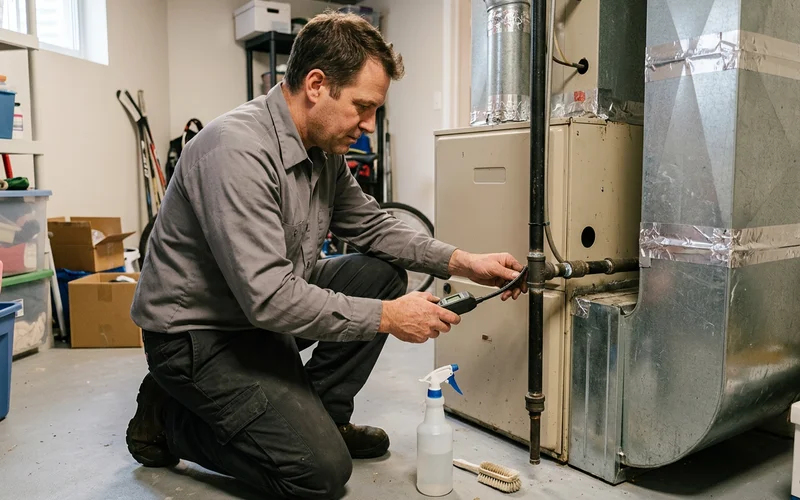
Red tag compliance is our stated specialty. We attend Type A and Type B tags across Toronto and the GTA every week, and our technicians arrive with the licence, the diagnostic equipment, and the common repair parts on the van. That combination is why most of the tags we attend are cleared with gas restored inside 24 hours rather than dragging on for a week.
What we do on a red tag call
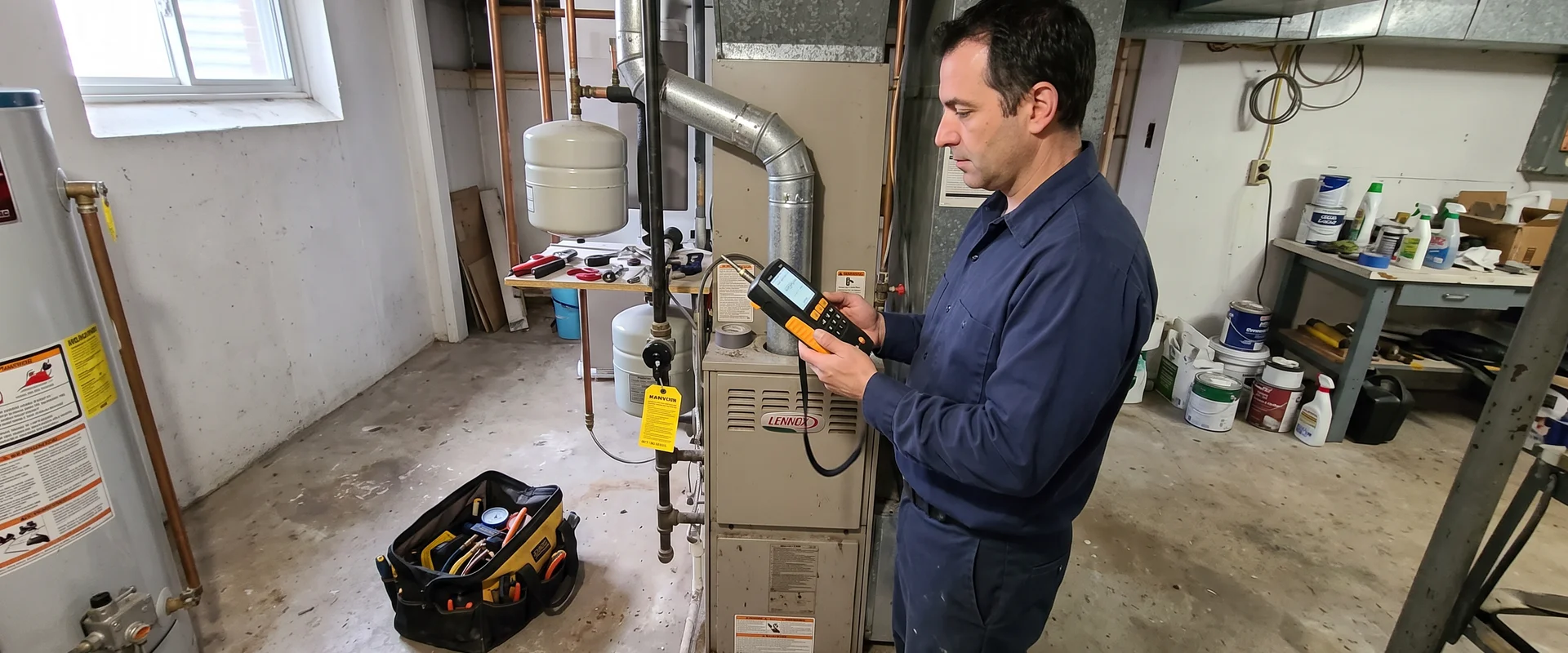
Our inspection covers the whole gas system, not only the appliance that was tagged. We run electronic leak detection on every accessible joint and connector, take a gas pressure manometer reading, scope the furnace heat exchanger with a borescope camera, and run a full combustion analysis with carbon monoxide readings in parts per million at the flue. We also check draft and venting on every gas appliance in the house, because in Toronto’s older stock the tagged appliance is frequently a symptom rather than the cause.
You then get the findings in plain language along with a fixed written price. Nothing gets replaced or repaired until you have agreed to it.
Common red tag causes we see in Toronto homes
Cracked or corroded heat exchanger
The most common cause and the most over-diagnosed one. A genuine crack allows combustion gases to mix with the air circulating through your home, which is why the appliance must be taken out of service. We verify with a borescope image and combustion readings before recommending anything, and we are happy to provide a second opinion if another company has already given you a verdict.
Blocked, corroded, or improperly sized venting
When a high-efficiency furnace replaced a chimney-vented one years ago, the gas water heater is often left venting alone into a chimney far too large to draft properly. The result is spillage, condensation, and eventually corrosion. System 636 flue venting problems on newer high-efficiency equipment show up as well, usually where a previous installer used the wrong pipe or cement.
Gas leaks at fittings and connectors
Older flexible connectors, unsupported piping, and joints disturbed during a renovation are the usual sources. Electronic leak detection finds them quickly, and repairs are typically straightforward.
Elevated carbon monoxide in the flue
High CO readings point to incomplete combustion, which can come from a dirty burner assembly, a restricted flue, or a failing heat exchanger. A combustion analyzer separates these causes properly, where a visual inspection alone cannot.
Prior workmanship that never met code
Unpermitted gas line work, missing sediment traps, absent shut-off valves, and appliances installed without adequate clearance all draw tags. These are usually inexpensive to correct once identified.
What affects the cost of red tag clearance in Toronto?
The $350 inspection fee is fixed and covers diagnosis and documentation. What varies is the repair. Venting corrections, connector replacements, and control faults sit at the lower end. A heat exchanger replacement or a full appliance swap sits at the upper end, and on equipment older than about 15 years, replacement is usually the better value than a major component repair.
Three other factors move the number: how many gas appliances are involved, whether the chimney needs relining after the work, and whether a permit is required for gas piping changes. All of these are identified during the inspection and priced in writing before we begin, so there is no mid-job surprise.
If the tagged appliance turns out to need replacing, we can usually complete the swap the same week, whether that is a high-efficiency furnace replacement or a boiler installation, and installations carry our 2-year labour warranty alongside 5 to 10 years of manufacturer coverage.