What is a cold-climate heat pump, and does it suit a Toronto home?
A heat pump is an air conditioner that can run in reverse. In summer it moves heat out of your house; in winter a reversing valve flips the cycle and it moves heat from the outdoor air into your house. Because it moves heat rather than creating it by burning fuel, it delivers more heat energy than the electricity it consumes, which is what makes the economics work.
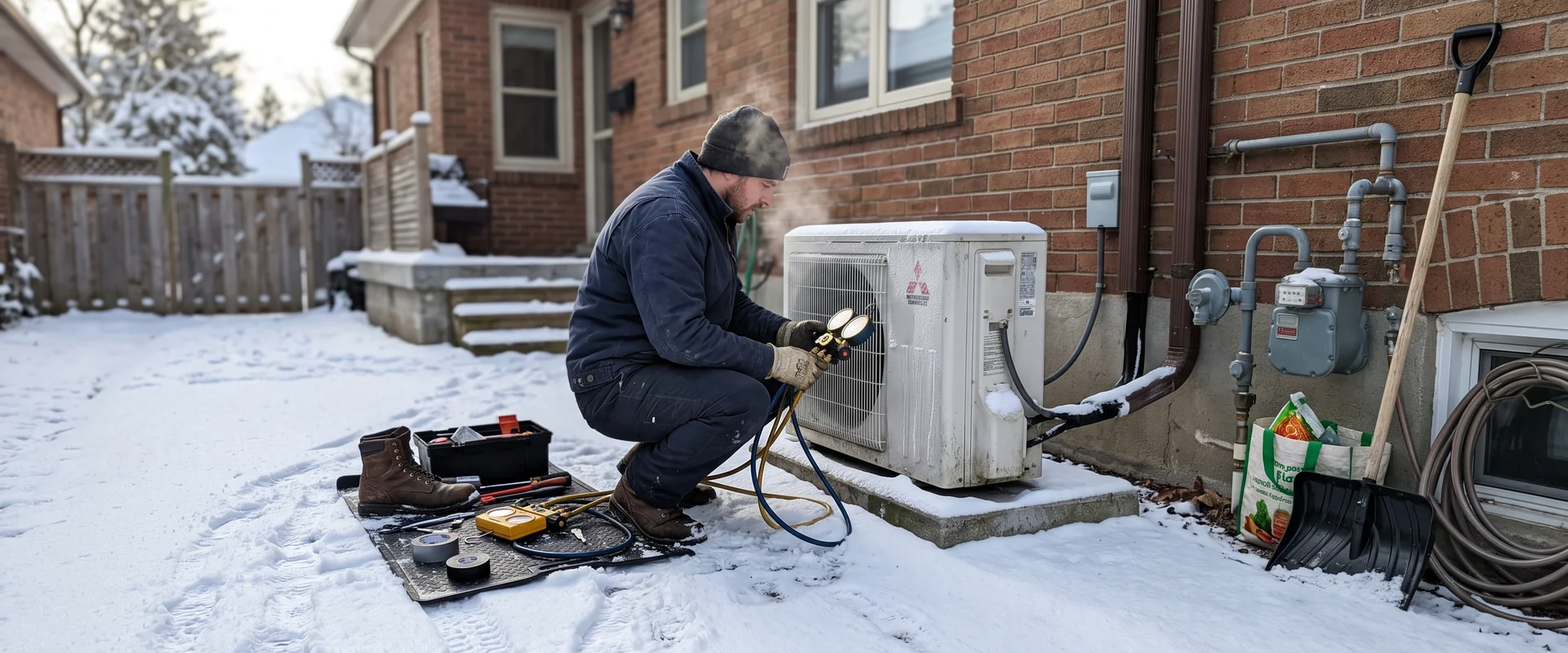
The important qualifier for Toronto is “cold-climate”. A standard heat pump loses most of its output around freezing. A cold-climate air-source heat pump, or ccASHP, uses an inverter compressor and enhanced vapour injection to hold usable capacity well below -15 degrees, with many models listed to -25 or -30. We size exclusively from the NEEP cold-climate listings and the NRCan qualified product list, using published capacity at low ambient temperature rather than nominal tonnage. That distinction is the single most common reason a heat pump disappoints its owner.
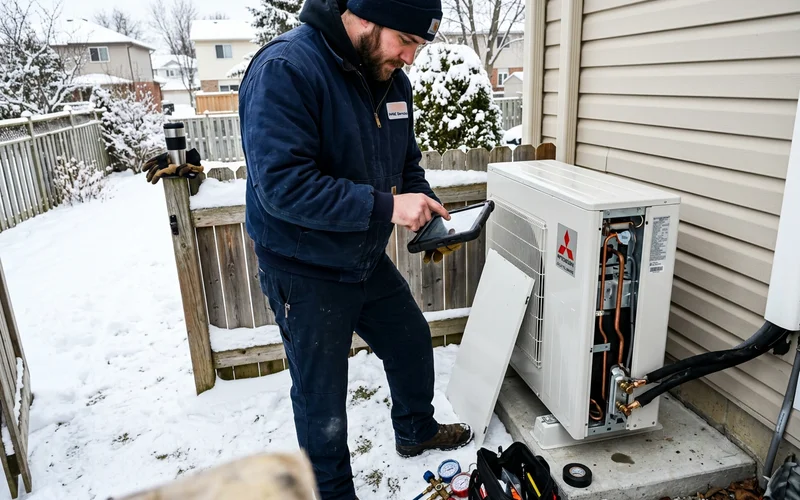
Toronto’s newer housing stock, particularly across Markham, Vaughan, Milton, and the Seaton area of Pickering, is tight and well insulated with a modest heating load. That is exactly the condition where a heat pump performs strongly. Older, leakier homes in North York, York, and central Oshawa can still work well, but often make more sense as a dual-fuel installation.
What is included in every heat pump installation
A full heating and cooling load calculation, duct capacity and static pressure assessment, electrical panel review, NEEP-listed equipment selection, outdoor unit mounted on a raised stand clear of snow accumulation, insulated and protected line set, condensate management for winter operation, control and changeover configuration, full commissioning including defrost verification, and rebate paperwork completed and submitted on your behalf.
Choosing between full electric and dual fuel
Full electric heat pump
The heat pump handles the entire heating season, with electric auxiliary heat strips covering extremes and defrost cycles. This is the right choice if you have no gas service, if you are removing an oil or propane system, or if decarbonisation is a priority. It usually requires 200 amp electrical service.
Dual-fuel hybrid
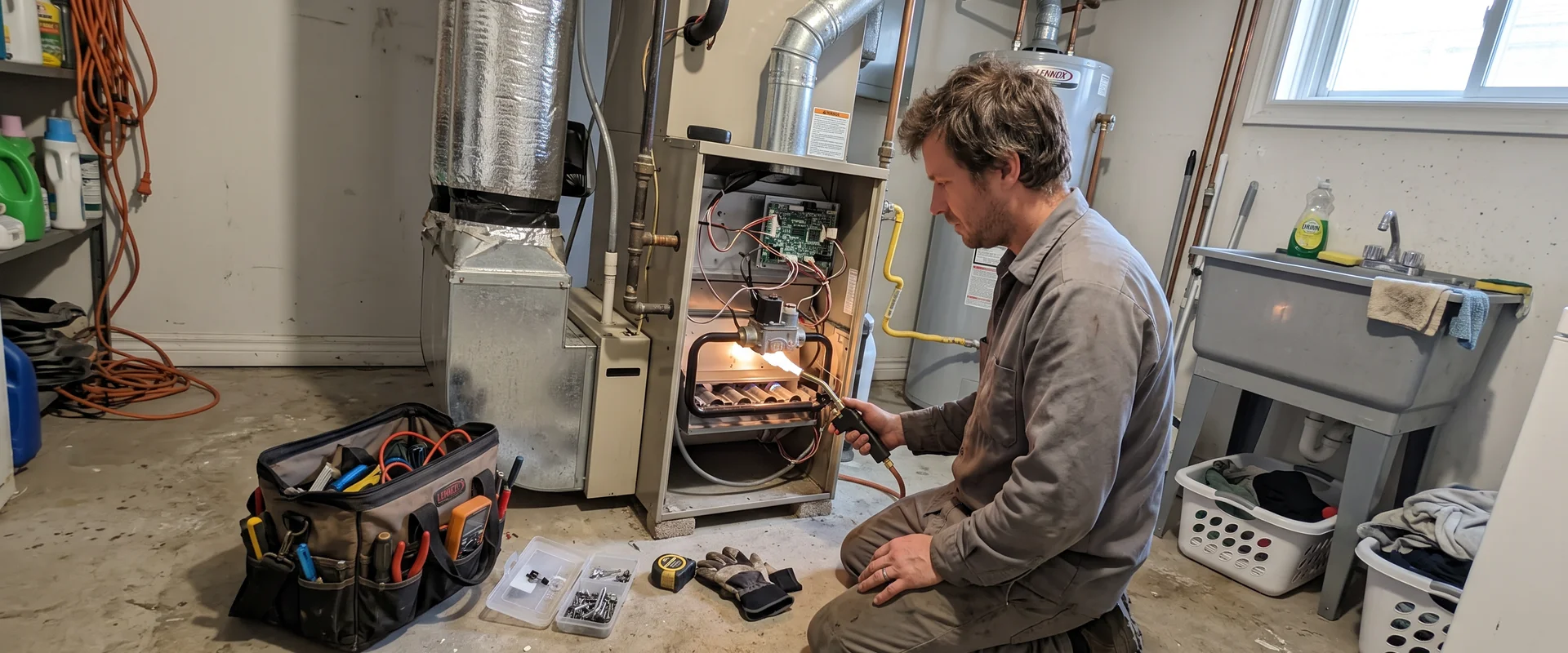
The heat pump runs down to a changeover temperature we set with you, typically somewhere between -5 and -12 degrees depending on your rates and equipment, then the existing gas furnace takes over. This captures the large majority of the season on the heat pump while keeping a reliable, high-output backup. For most Toronto homes with a healthy gas furnace, this is the option we recommend.
Ductless multi-zone
For homes without ductwork, or for additions, attics, and basements, a ductless multi-zone heat pump gives per-room control without retrofitting ducts. Our ductless mini-split installation page covers that route in more detail.
What affects heat pump installation cost in Toronto?
Capacity and equipment tier come first: a larger home with a higher heating load needs a larger, more capable unit. Second is the indoor side. A ducted retrofit that reuses your existing ductwork and keeps your furnace is the cheapest path; replacing the furnace with a new air handler costs more. Third is electrical, since a full electric system with auxiliary heat strips may require a service upgrade.
Fourth is ductwork condition. A heat pump moves more air at lower temperature than a furnace does, so ducts that were marginal before become a real constraint. If static pressure is too high we will say so and quote the ductwork correction, because installing good equipment on restricted ducts wastes your money.
Fifth, and working in your favour, is rebates. Eligible systems attract up to $6,500 combined through the Home Renovation Savings program and Canada Greener Homes. We confirm the exact figure for the model we are quoting, include it clearly in the proposal, and submit the application ourselves once the work is signed off.