What is a ductless mini-split and when does it make sense?
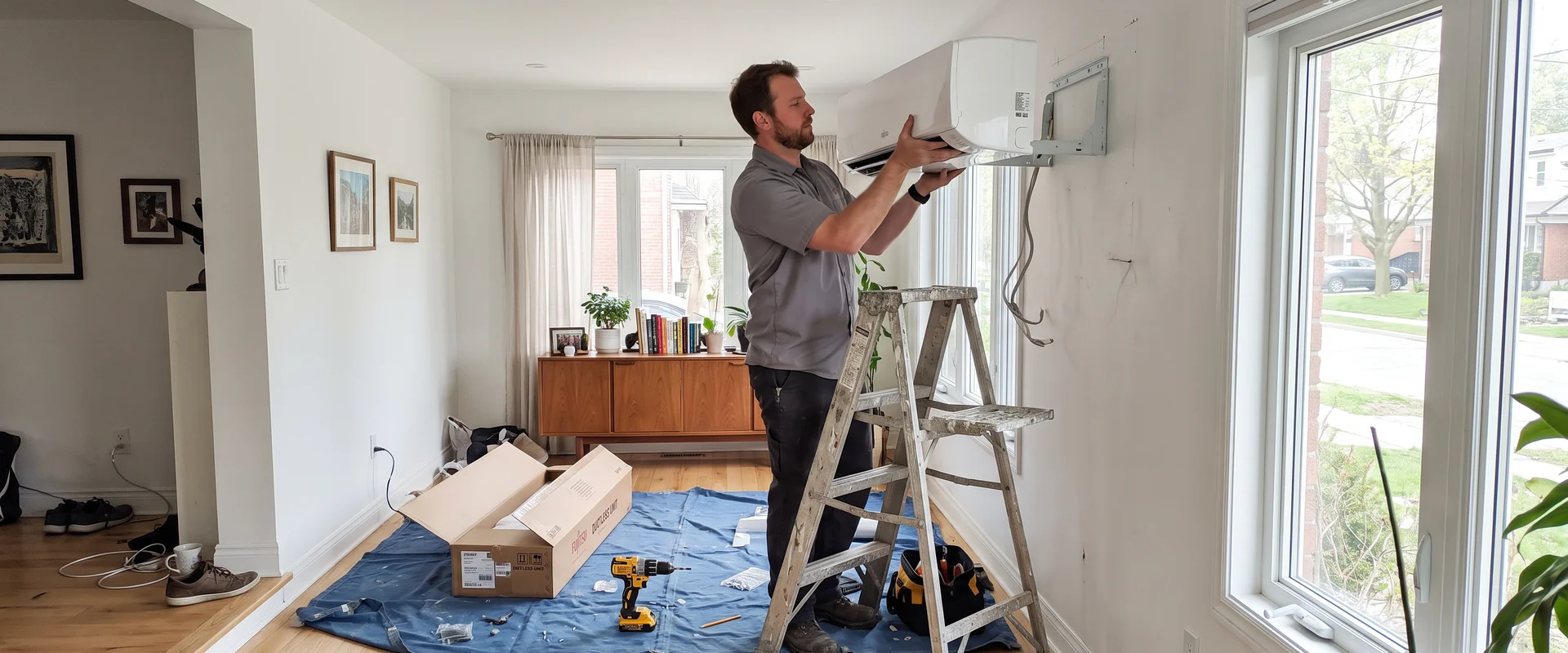
A ductless mini-split is a heat pump split into two parts: a compact outdoor condenser and one or more indoor heads mounted on a wall, in a ceiling, or at floor level. Refrigerant lines run between them through a single small wall penetration, so there is no ductwork to install and no ceilings to open up. Each indoor head has its own thermostat, so each zone holds its own temperature independently.
The case for a mini-split is strongest wherever ducts do not reach or cannot cope. Home additions built after the original heating system was designed, finished attics with sloped ceilings, basements that were completed years later, converted garages, sunrooms, and condos are all classic cases. So is the single stubborn room in an otherwise comfortable house, the west-facing office above the garage that hits 30 degrees in July while the rest of the house is fine. Extending ductwork to solve that problem is expensive and disruptive; a single-zone mini-split solves it in a day.
Every mini-split we install is a heat pump, so it heats as well as cools. For spaces you actually live in through the winter, we specify cold-climate models that hold useful capacity below -15 degrees rather than falling back on portable heaters in February. For a garage workshop or a shoulder-season sunroom, a standard model is usually the sensible economy.
What is included in every mini-split installation
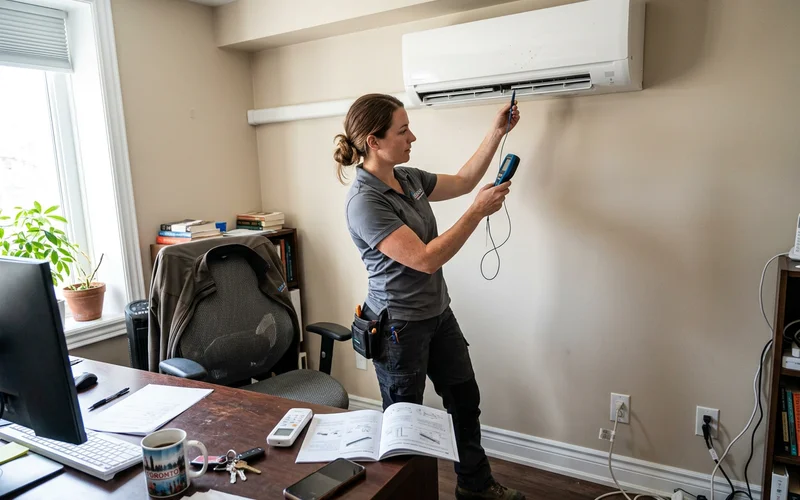
Room-by-room load assessment, zone sizing, indoor head placement planning, outdoor unit siting for noise and snow clearance, wall penetration sealed and finished, insulated line set in a paintable cover, condensate drainage, electrical connection and disconnect, deep vacuum and verified refrigerant charge, heating and cooling tested on every zone, controls handover, and a 2-year labour warranty.
Choosing a configuration
Single zone
One indoor head and one outdoor unit. The simplest and cheapest option, ideal for a single problem room, an addition, or a garage.
Two zone
Two indoor heads sharing one outdoor condenser. The most common configuration we install, typically covering a finished basement plus a home office, or two upstairs bedrooms.
Multi zone
Three to five indoor heads on one outdoor unit. Lower cost per zone and only one condenser outdoors, but it needs careful sizing. Fitting identical heads in rooms of very different sizes leads to short-cycling in the small rooms, which is the most common design fault we see in systems installed by others.
Indoor unit styles
Wall-mounted heads are the standard and least expensive. Ceiling cassettes suit rooms where wall space is limited and give a more discreet result. Floor consoles work well under windows in rooms with sloped ceilings, such as finished attics.
What affects mini-split installation cost in Toronto?
Zone count comes first, though the cost per zone falls as zones are added to a shared outdoor unit. Second is capacity per zone, driven by room size, window area, and insulation rather than a rule of thumb.
Third is the equipment tier: cold-climate models with enhanced low-temperature performance cost more than standard ones, and ceiling cassettes cost more than wall heads. Fourth is line set length and routing complexity, since a head on the far side of the house from the practical condenser location needs a longer, more involved run.
Fifth is electrical. Some installations need a new dedicated circuit and disconnect, which we identify during the site visit. All of this goes into a written fixed price before any work begins.