What does furnace installation and repair include?
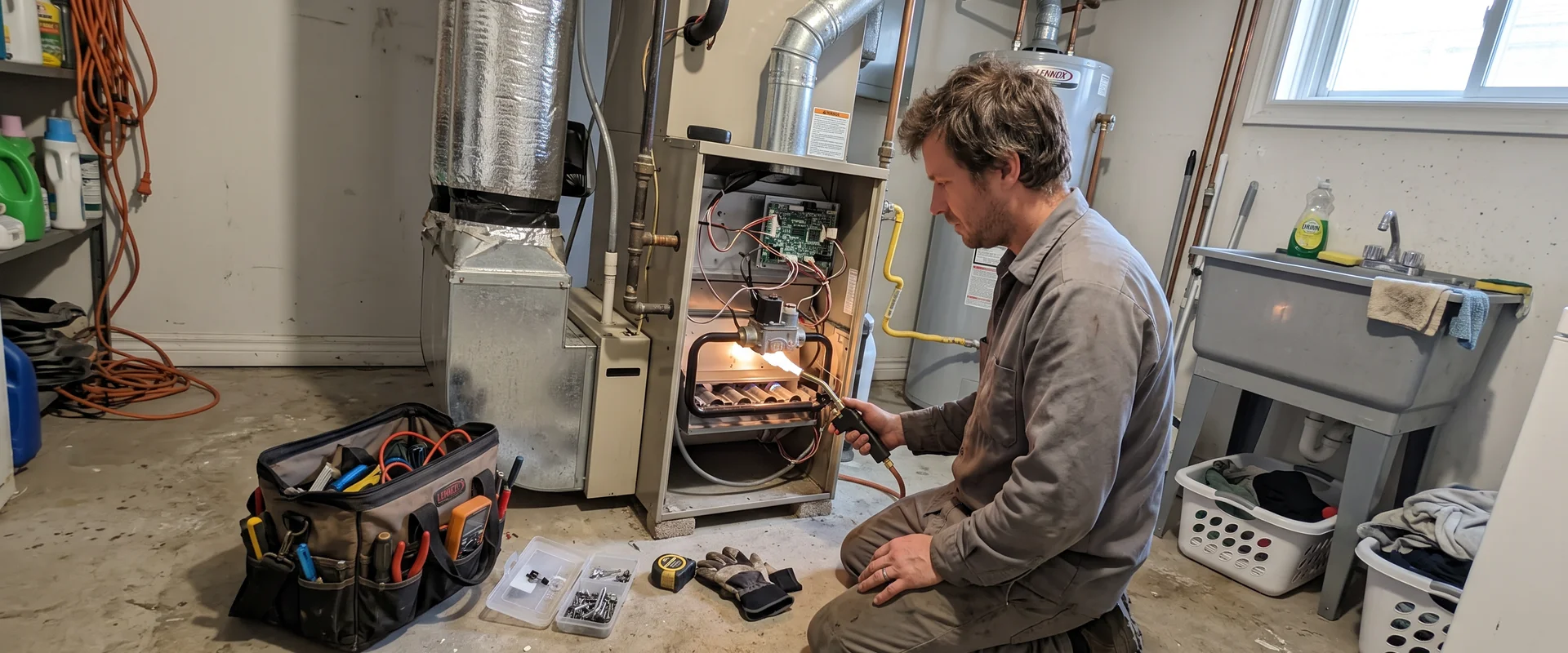
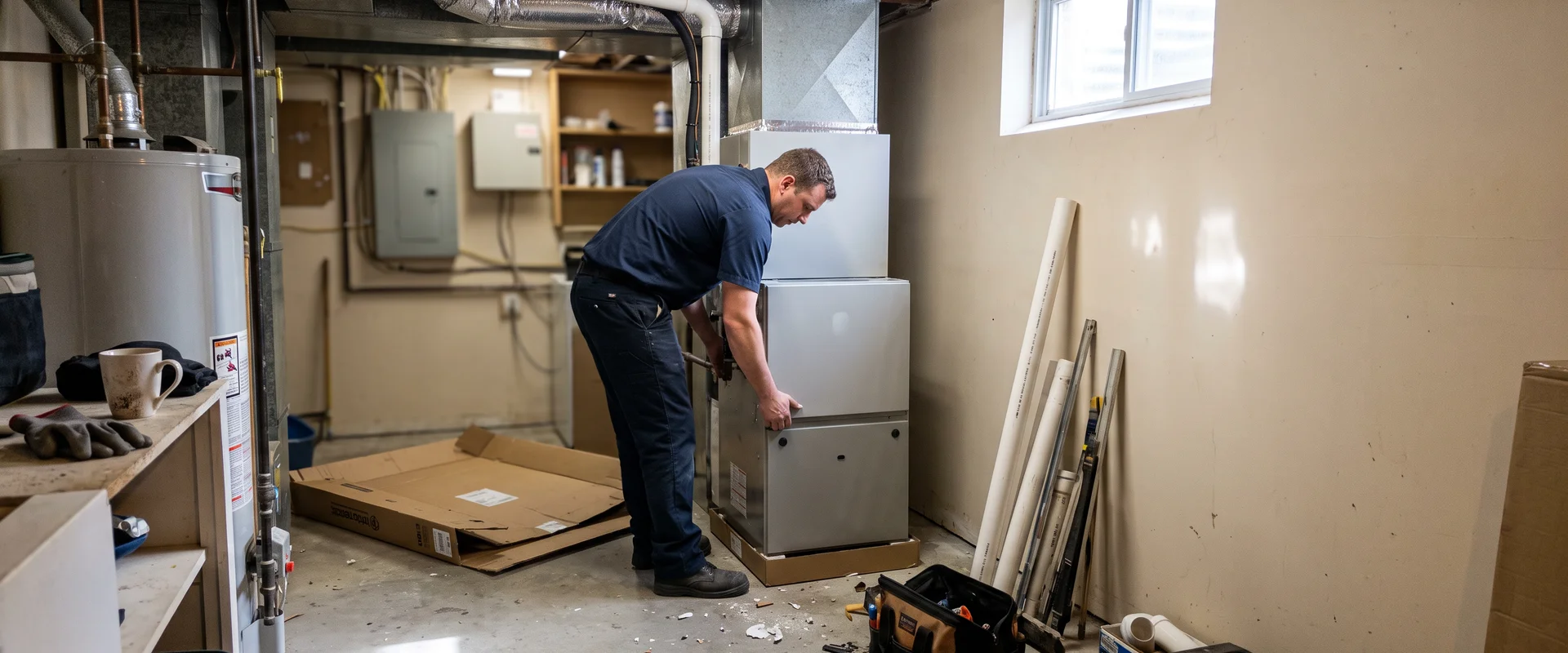
Best HVAC Toronto installs, replaces, and repairs high-efficiency gas and electric furnaces across Toronto and the GTA. On the repair side that means fast, accurate diagnosis of no-heat calls, with same-day service on weekday emergencies and 24/7 dispatch when a house is genuinely cold. On the installation side it means a properly sized, correctly vented, fully commissioned system rather than a like-for-like swap of whatever was there before.
The sizing point deserves emphasis because it is where most Toronto furnace replacements go wrong. The easy approach is to read the nameplate on the old unit and order the same output. The problem is that the old unit was usually oversized to begin with, and the house has probably had windows, insulation, or an addition changed since. An oversized furnace satisfies the thermostat quickly, shuts off, and repeats, which produces temperature swings, noisy short cycles, and premature wear on the igniter and inducer. We run a Manual J heat load calculation instead, which is why our replacements usually come in at equal or smaller capacity and still heat better.
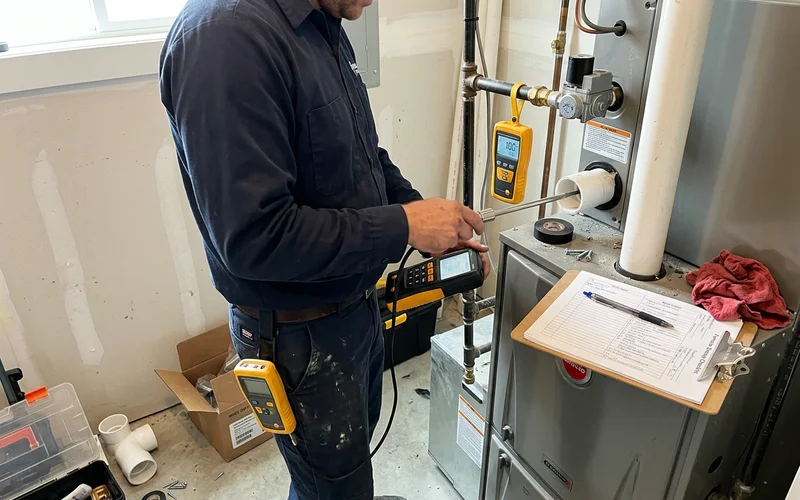
Every installation includes a full commissioning: gas pressure set with a manometer, temperature rise measured against the manufacturer’s specification, static pressure checked across the blower, venting verified, and a combustion analysis with carbon monoxide readings recorded. That last step is the one most often skipped, and it is the one that tells you whether the appliance is actually burning cleanly.
What is included in every furnace installation
Removal and disposal of the old unit, a new ENERGY STAR-rated condensing furnace, PVC intake and exhaust venting to the side wall, condensate drainage and neutralisation where required, a new thermostat if yours is not compatible, a TSSA safety inspection, permit where applicable, and a 2-year labour warranty. Manufacturer parts coverage of 5 to 10 years is registered on your behalf.
What goes wrong with furnaces in Toronto homes?
The furnace runs but there is no heat
Usually a failed hot surface igniter or a dirty flame sensor. Both are inexpensive parts we carry, and both produce the same symptom: the blower runs, the burners try to light, and the unit locks out after three attempts. A cracked or blocked pressure switch hose is the third common cause.
The furnace short-cycles
Turning on and off every few minutes points to either an oversized furnace, a badly restricted filter, or a failing limit switch. In Scarborough and North York bungalows with finished basements, restricted return air is the usual culprit, and correcting the ductwork solves it far more cheaply than new equipment.
Loud bangs on startup
Delayed ignition, where gas accumulates briefly before lighting. It is unpleasant and it is also hard on the heat exchanger. The cause is normally dirty burners or incorrect gas pressure, both correctable on a service visit.
The blower runs constantly
Often a stuck fan relay or a thermostat set to “on” rather than “auto”. Occasionally it is a failing limit switch keeping the blower engaged to shed heat, which is worth diagnosing quickly.
Rising gas bills with no comfort change
A mid-efficiency furnace steadily losing efficiency, restricted airflow, or duct leakage into an unconditioned space. This is the point at which a load calculation and an honest replacement conversation usually make sense, including whether a rebate-eligible cold-climate heat pump suits your home better than another gas furnace.
What affects furnace installation cost in Toronto?
Five factors move the price within the $3,500 to $7,500 band. The efficiency tier and burner staging come first: a single-stage 96% AFUE unit is the entry point, while two-stage and modulating furnaces with ECM variable-speed blowers cost more and deliver noticeably more even heat in larger homes. Physical size and output are second, driven by the load calculation rather than the old nameplate.
Third is venting. Moving from chimney venting to PVC side-wall venting is routine, but if a gas water heater is left behind on the chimney, it will need a properly sized liner — and if it is not corrected, it is one of the most common causes of an Enbridge red tag. Fourth is ductwork: homes with undersized returns, common in post-war Toronto bungalows with finished basements, get better results if the distribution is corrected at the same time. Fifth is accessibility, since a tight mechanical room in an older East York semi takes longer to work in than an open Vaughan basement.
We identify all five during the estimate and put them in writing before we start, so the price you agree to is the price you pay.