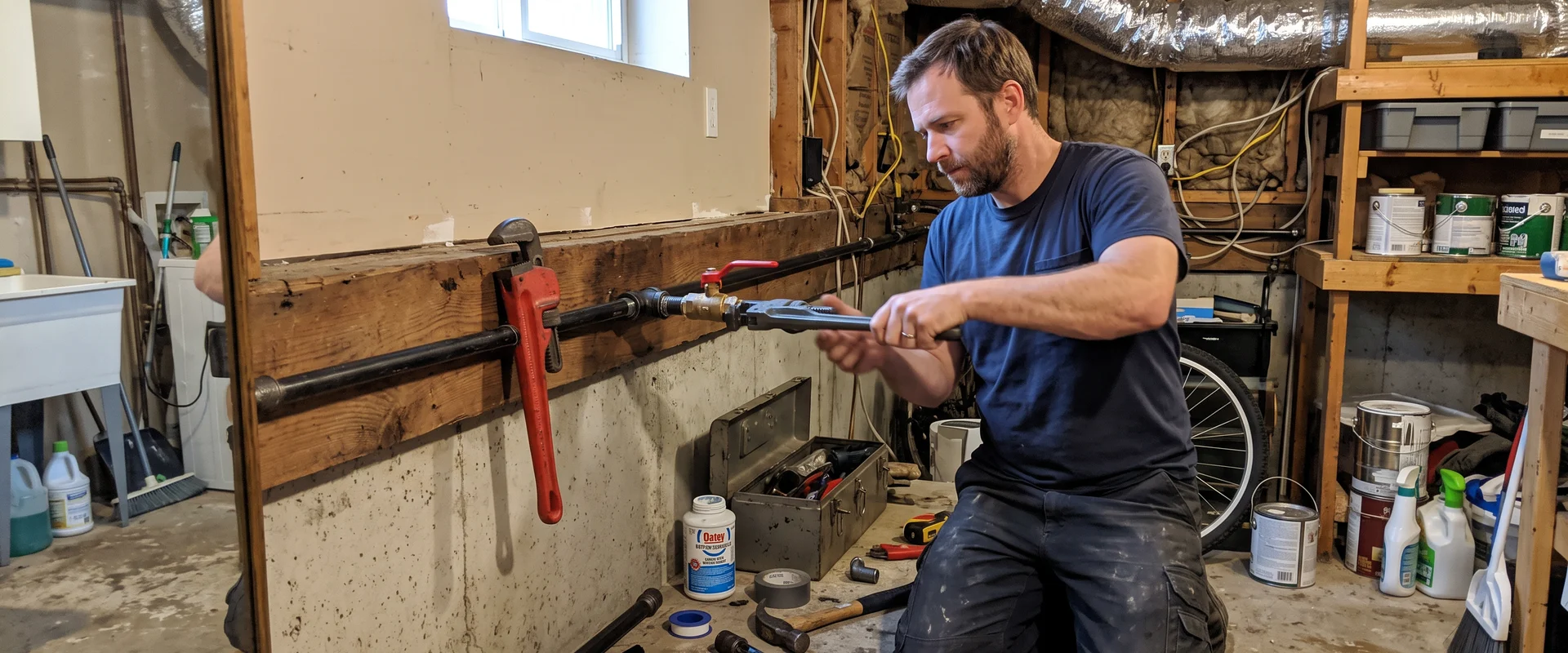
Gas technician installing a black iron gas line with a shut-off valve along a basement joist

TSSA-Certified Gas Line Installation & BBQ Hookups in Toronto

Last updated:

TSSA G1/G2 certified gas line installation for furnaces, water heaters, generators, outdoor kitchens, BBQ hookups, and gas fireplaces.

  • TSSA G1/G2 certified
  • 20+ years experience
  • 2-Year Labour Warranty

From $500 — per run, depending on length and routing

  • 4.9 (150+ reviews)
  • TSSA G1/G2 Certified & $2M Insured
  • 2-Hour Emergency Response
  • 2-Year Labour Warranty

Common problems

Sound familiar?

Want a gas BBQ or fire table without a propane tank to swap

A properly sized, code-compliant gas line run to your outdoor kitchen means no more running out of propane mid-cookout.

Need a standby generator hookup done right

TSSA-certified gas line sizing and pressure testing for generator, fireplace, and appliance connections, permitted where required.

Worried about a line that wasn't done to code

Every gas line job includes a pressure test and inspection before we sign off, so there's no guessing about safety.

What does gas line installation involve?

Best HVAC Toronto runs TSSA G1/G2 certified gas lines for furnaces, water heaters, standby generators, outdoor kitchens, BBQ hookups, fire tables, pool heaters, gas fireplaces, ranges, and dryers. Every job is priced by run length and appliance load rather than hourly, and every job includes the permit and a TSSA pressure test.

The part homeowners rarely expect is the load calculation. Gas piping is sized for total simultaneous BTU demand at a given water column pressure, and every appliance you add draws from the same supply. A house running a furnace, a water heater, and a gas range may be comfortably supplied, but add a pool heater and a fire table and the same pipe can no longer deliver enough volume on a cold night when the furnace is calling. The symptom is a furnace that struggles or locks out at the worst possible moment, and it is entirely preventable by sizing the system properly at the start.
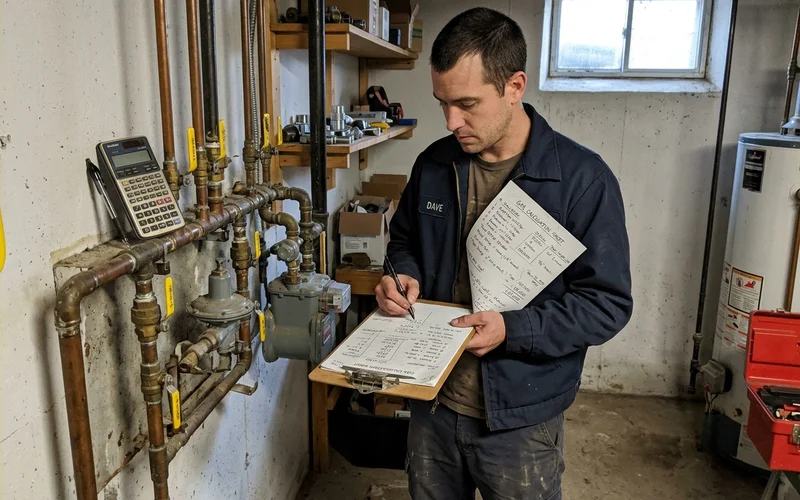
Technician calculating total BTU load and pipe sizing on a job sheet beside an exposed gas manifold in a basement

Doing this properly matters beyond performance: unpermitted piping, missing sediment traps, and absent shut-off valves are among the most common findings behind an Enbridge red tag. We use Schedule 40 black iron pipe for exposed and structural runs and CSST where flexible routing through finished space is the better answer, both installed with correct supports, bonding, and protection. Every appliance gets a dedicated shut-off ball valve and a sediment trap, and every exterior BBQ connection gets a proper quick-disconnect box so the grill can be removed for winter.

What is included in every gas line job

Site assessment and BTU load calculation, a fixed written quote, permit where required, pipe sizing to CSA B149.1, correctly supported and protected routing, dedicated shut-off valves, sediment traps at appliance connections, a TSSA pressure test with the line tagged, electronic leak detection at every joint, appliance connection and commissioning, and documentation for your records.

What we run gas lines for

BBQ and outdoor kitchen hookups

The most popular request we get from spring onward. A permanent gas connection means no more propane tank swaps. We fit an exterior quick-disconnect so the grill can be detached and stored, plus an accessible shut-off valve. Full outdoor kitchens with a grill, side burner, and fire feature need a manifold and a larger supply, which we size for the combined load.

Gas fireplaces

Common in Richmond Hill, Vaughan, and Kleinburg custom homes, often two or three per house. Each one adds to your total load, and each one has venting that needs annual inspection. We handle both the supply line and the appliance connection.

Standby generators

A whole-home generator draws a substantial volume when it runs. We calculate the load, upsize the supply where needed, install and test the line, and coordinate commissioning with your electrician so you are not managing two trades yourself.

Ranges, dryers, and appliance conversions

Converting a kitchen to gas needs a correctly sized run, a shut-off, and a sediment trap. Straightforward work when the supply can carry it, which we verify first.

Pool heaters and fire tables

High-demand seasonal appliances. Both need a load review and an accessible exterior shut-off for winter isolation.

What affects gas line cost in Toronto?

Run length is the first factor and the most obvious. Second is routing: a run through an open basement is far quicker than one that must be concealed through finished ceilings or exterior walls. Third is pipe size, driven by the BTU load calculation, since a larger appliance or a longer run needs larger diameter pipe and larger fittings.

Fourth is the number of appliances. A manifold serving a grill, a side burner, and a fire feature costs more than a single connection. Fifth is whether the existing supply is adequate. If your meter or main supply piping cannot carry the added demand, an upsize is required, and occasionally a meter change through Enbridge. We identify this during the site visit and tell you before quoting rather than discovering it halfway through the job.
Transparent pricing

How much does gas lines cost in Toronto?

BBQ hookups typically run $400 to $1,200. Permits and a TSSA pressure test are always included.

Written quote before any work begins. No hidden fees.

BBQ hookup

Short run to a patio or deck

Starting from $ 400 per run, depending on length and routing

  • Exterior quick-disconnect box
  • Dedicated shut-off valve
  • Permit and pressure test included
  • Typically $400 to $1,200
Get a quote
MOST COMMON

Appliance gas line

Stove, dryer, fireplace, or heater

Starting from $ 900 per run, depending on length and routing

  • Correct BTU load sizing
  • Sediment trap at the appliance
  • Code-compliant supports and routing
  • Appliance connection and leak test
Get a quote

Outdoor kitchen or generator

Longer or multi-appliance runs

Starting from $ 2,000 per run, depending on length and routing

  • Whole-house BTU load review
  • Multi-appliance manifold
  • Longer buried or concealed runs
  • Coordination with your electrician
Get a quote

Prices are guide ranges for Toronto and the GTA. Final pricing depends on your equipment, access, and site conditions, and we confirm it in writing before starting. Request a free estimate or call 647-254-4113.

Financing available on approved credit, plus lease-to-own with zero down on qualifying installs.

Why us

Why choose Best HVAC Toronto for gas lines?

We size the whole system

Adding a fire table or generator without checking total BTU demand can starve your furnace in January. We review the whole load, not just the new appliance.

Permits handled

Gas piping work needs a permit and a pressure test. We pull the permit, complete the test, and leave the tagged documentation with you.

Neat, concealed routing

Runs follow joists and structure rather than crossing rooms at random, and exterior penetrations are sealed and finished properly.

G1/G2 licensed on every job

Gas work is licensed work in Ontario. Every run we install is done by a certified technician and documented to CSA B149.1.

How Best HVAC Toronto compares

Feature Typical provider Best HVAC Toronto
Load calculation New appliance only Whole-house BTU demand reviewed
Permit Left to the homeowner Pulled and closed by us
Pressure test Sometimes skipped Always performed and tagged
Shut-off and sediment trap Not always fitted Fitted at every appliance
Pricing Hourly, open-ended Fixed price by run length

How it works

How does our gas lines service work?

  1. 1

    Site visit and load check

    We measure the run, review your existing appliances, and calculate total BTU demand so the new line does not starve the furnace on a cold night.

  2. 2

    Written quote and permit

    You get a fixed price by run length and appliance load. We pull the permit where one is required rather than leaving that to you.

  3. 3

    Install the line

    Black iron or CSST as appropriate, correctly supported, with a dedicated shut-off valve and a sediment trap at each appliance connection.

  4. 4

    Pressure test and connect

    We pressure test the line, tag it, leak-test every joint electronically, connect and commission the appliance, and leave you the documentation.

Not sure what your gas lines situation needs?

Get a straight answer and a written price, with the numbers to back it up. No pressure, no scare tactics.

Our work

Recent gas lines projects

Click any image to enlarge.

Reviews

What customers say about our gas lines work

4.9 out of 5 from 150+ customer reviews

Needed a gas line run for our backyard BBQ and outdoor kitchen. TSSA-certified, permits handled, pressure test done properly. Fair price quoted by run length. Would use again.

AAngela R.Woodbridge, Vaughan

Gas line for the BBQ and a fire table. Permit handled, pressure test done, backyard put back exactly as it was. No complaints at all.

LLaura M.Streetsville, Mississauga

Standby generator gas connection done properly with the permit and pressure test. They coordinated with the electrician so we weren't stuck in the middle.

GGurpreet S.Springdale, Brampton

FAQ

Gas Lines questions, answered

How much does a BBQ gas hookup cost in Toronto?

Most BBQ hookups run $400 to $1,200. The price is driven by run length, how the line is routed, and whether it passes through finished space. A short run from a basement mechanical room straight out to a deck is at the lower end; a long run across a finished basement to a rear patio sits higher. Permit and pressure test are included either way.

How much does gas line installation cost generally?

Interior appliance lines typically run $500 to $3,000 depending on length, pipe size, and routing. Multi-appliance outdoor kitchens, pool heaters, and standby generators are quoted on total BTU load and distance. We price by the job rather than hourly, so the number you agree to is the number you pay.

Do I need a permit for a gas line in Ontario?

New gas piping and appliance connections require work by a TSSA-certified G1 or G2 technician and, in most municipalities, a permit. We handle the permit and the required pressure test as part of the job. Uncertified gas work is an offence under Ontario Regulation 215/01 and typically voids both your equipment warranty and your home insurance coverage.

Can you connect a standby generator to my gas supply?

Yes. Generator connections are gas work and need careful BTU load sizing, because a generator draws a large volume when it runs. We calculate the demand against your existing appliances, upsize the supply piping if required, install the run, pressure test it, and coordinate the commissioning with your electrician.

What is the difference between black iron pipe and CSST?

Schedule 40 black iron is rigid threaded steel pipe, the traditional choice, robust and well suited to exposed runs. CSST, or corrugated stainless steel tubing, is flexible and faster to route through finished spaces with fewer joints. CSST requires specific bonding and protection details. We choose based on the route, and both are fully code-compliant when installed correctly.

What is a sediment trap and do I need one?

A sediment trap, sometimes called a drip leg, is a short vertical capped section of pipe just before the appliance connection. It catches debris and moisture before they reach the gas valve. CSA B149.1 requires them on most appliance connections, and their absence is a common finding on inspection of older or unpermitted work.

Can you run a gas line for a fire table or pool heater?

Yes. Both are common backyard additions across Vaughan, Richmond Hill, and Mississauga. Pool heaters in particular draw a large BTU load, so a whole-house load review is essential before adding one. We also fit an accessible exterior shut-off so the appliance can be isolated for winter.

Will you have to cut into my walls or ceilings?

Usually not much. Most runs follow existing joist bays, mechanical room routes, and utility spaces. Where a finished ceiling has to be opened we discuss it before starting and keep the openings small and in inconspicuous locations. Drywall patching can be included in the quote if you would like us to arrange it.

How long does a gas line installation take?

A straightforward BBQ hookup is usually half a day. An appliance line through finished space, or a longer outdoor kitchen run, is typically a full day. Generator connections take a day plus commissioning time with the electrician. We confirm the schedule in the written quote.

Can you add a gas line for a stove or dryer conversion?

Yes. Converting from electric to gas for a range or dryer needs a correctly sized line, a dedicated shut-off, and a sediment trap, plus verification that your existing supply can carry the added load. We handle the gas side and connect the appliance; any electrical decommissioning is handled by an electrician.

24/7 for gas emergencies, red tags, no-heat and no-AC

Ready to book gas lines?

TSSA G1/G2 certified gas line installation for furnaces, water heaters, generators, outdoor kitchens, BBQ hookups, and gas fireplaces. Written quotes before work begins, and a 2-year labour warranty.

  • 2-year labour warranty
  • Written quotes before work starts
  • TSSA G1/G2 certified, WSIB covered
Call Now